

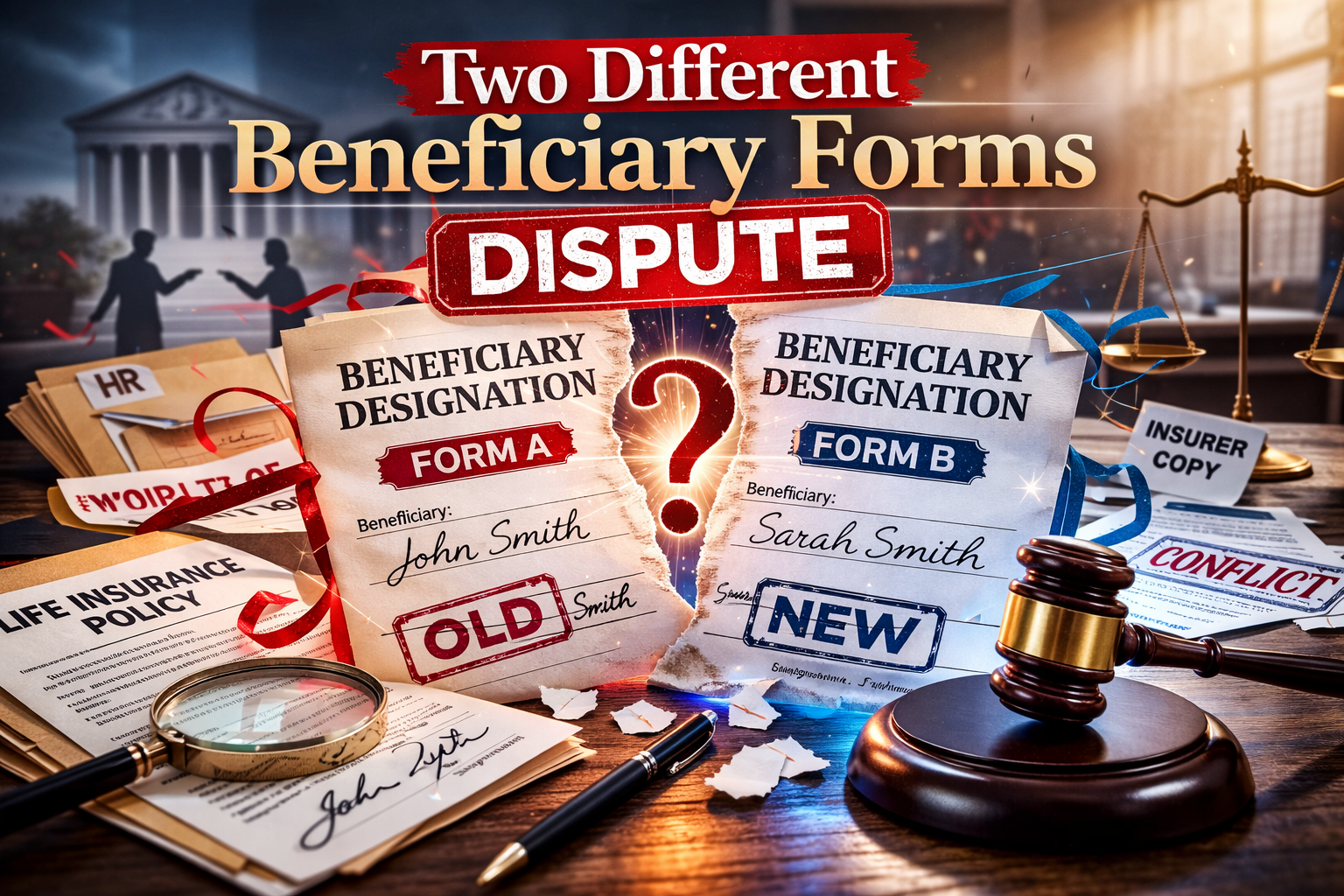
Few situations create more confusion in a life insurance claim than discovering that the insured completed more than one beneficiary form. Families often assume the most recent form controls. Insurers often assume the oldest form controls. Employers sometimes keep one version while the insurer keeps another. When two forms exist, the claim almost always slows down, and in many cases the insurer refuses to decide and pushes the dispute into court.
Multiple beneficiary forms are not rare. They happen when the insured updates coverage, changes jobs, switches carriers, enrolls online, or submits a paper form that is never processed. The problem is not the existence of two forms. The problem is that insurers rarely know which one is valid, and they often choose the path that protects themselves rather than the beneficiary. When you are facing a beneficiary dispute, we are here for you. Look at our beneficiary dispute fact sheet for more information.
Why Two Beneficiary Forms Create Immediate Red Flags for Insurers
When an insurer sees two different forms, it assumes there is a risk of paying the wrong person. This triggers internal reviews, legal consultations, and requests for additional documents. Insurers worry about the following issues:
Whether the insured intended to change the beneficiary
Whether the later form was ever received or processed
Whether the employer or insurer used the correct version of the form
Whether the insured signed both forms
Whether the forms conflict with each other in a material way
Whether one form was completed during illness or under pressure
Insurers often freeze the claim until they can determine which form controls. If they cannot make that determination, they shift the burden to the beneficiaries.
The Most Common Scenarios That Lead to Conflicting Beneficiary Forms
Two forms usually appear because of administrative mistakes or incomplete updates. The most frequent causes include:
The insured submitted a new form, but the insurer never processed it
The employer kept one version and the insurer kept another
The insured completed a paper form and later completed an online form
The insured updated the beneficiary during open enrollment, but the system saved the wrong version
The insured changed coverage levels and the new form did not replace the old one
The insured attempted to correct a mistake but both forms remained in the file
These situations create uncertainty about which form reflects the insured’s true intent.
How Insurers Decide Which Form Controls
Insurers rarely make a clear decision when two forms exist. Instead, they look for technical reasons to reject the newer form. They often claim:
The newer form was not signed correctly
The newer form was not dated
The newer form was incomplete
The newer form was never received
The newer form was not on the correct version of the form
The newer form was submitted after the insured lost capacity
Insurers prefer the form that creates the least risk for them, not the form that best reflects the insured’s intent. When the forms conflict and the insurer cannot justify choosing one, it often files an interpleader lawsuit.
Why Interpleader Lawsuits Are Common in These Cases
When two forms exist, insurers often refuse to decide. They deposit the benefit with the court and force the beneficiaries to litigate. Insurers do this to avoid liability. They claim they cannot determine the rightful payee and that paying the wrong person could expose them to a second lawsuit.
Interpleaders are expensive, slow, and stressful for families. They also shift the burden of proving the insured’s intent to the beneficiaries, even when the insurer created the confusion.
How Courts Resolve Conflicting Beneficiary Forms
Courts focus on intent. They look at which form the insured completed last, whether the insured followed the policy requirements, and whether the insurer or employer made administrative mistakes. Courts often consider:
The date and signature on each form
Whether the insured submitted the newer form correctly
Whether the insurer or employer failed to process the newer form
Whether the insured communicated the change to anyone
Whether the insured made similar changes in other documents
Whether the insured was ill or under pressure at the time
Courts do not automatically favor the older form. They also do not automatically favor the newer form. They look at the totality of the evidence to determine which form reflects the insured’s true intent.
What Beneficiaries Should Do When Two Forms Exist
Beneficiaries should act quickly. They should request the full claim file, including all versions of the forms, internal notes, emails, and communications between the insurer and employer. They should also gather evidence showing the insured’s intent, such as:
Text messages or emails discussing the change
Estate planning documents
Enrollment confirmations
Witness statements
Employer records
The goal is to show that the insured intended the later form to control and that any administrative errors should not defeat that intent.
Why These Cases Require Immediate Legal Help
Conflicting beneficiary forms create one of the most complex types of life insurance disputes. They involve contract interpretation, administrative errors, policy requirements, and questions of intent. Insurers often use the confusion to delay payment or push the case into court. Without legal intervention, beneficiaries risk losing the claim entirely.
A lawyer can force the insurer to follow the policy language, challenge improper rejections of the newer form, and protect the beneficiary’s rights in any interpleader action. The focus is always on proving the insured’s intent and preventing the insurer from using technicalities to avoid payment.
We recently settled claims from: Unum Life; Banner Life;Fidelity & Guarantee Life; Midland National Life; and MetLife.